Architecture and Design
The National Museum of Art, Osaka is a fully underground art museum, a rarity even by international standards. Its exterior design evokes the vitality of bamboo and reflects the growth and development of contemporary art, while the interior has been carefully planned to provide a comfortable viewing environment, including public areas that encourage interaction between visitors and art. The building was designed by the internationally renowned architect Cesar Pelli.
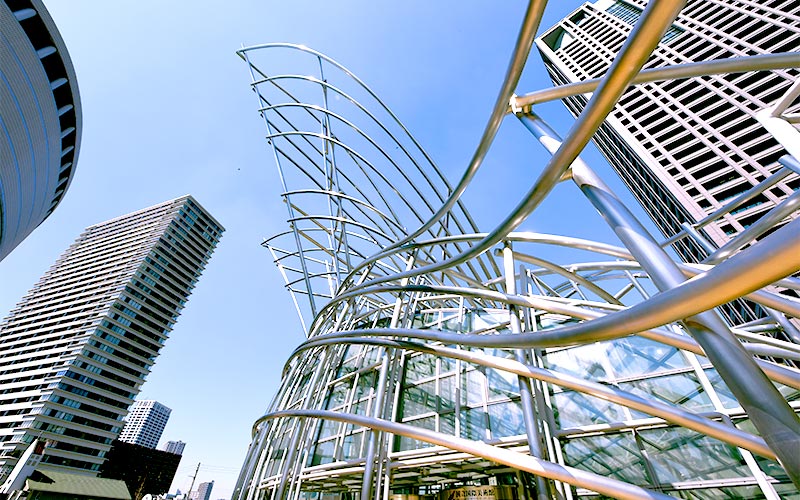
All of the museum’s key facilities, including the galleries and the museum shop, are located underground. From the entrance at ground level, visitors proceed to the lower floors by escalator, stairs, or elevator. An atrium extending from the glass-enclosed ground level down to the third basement floor is filled with natural light, creating an open, airy space that belies its subterranean setting.
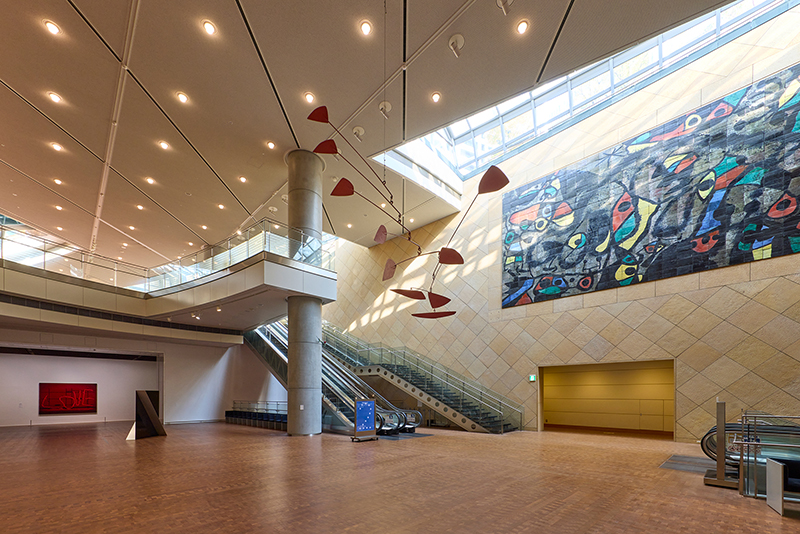
The first basement floor houses the ticket counter, auditorium, museum shop, restaurant, and other facilities. Visitors can view permanently installed works here, including Joan Miró’s ceramic mural Innocent Laughter (1969), Alexander Calder’s sculpture London (1962), and Takamatsu Jiro’s painting Shadow (1977). The floor also includes a kids’ room and an information area with a selection of art-related books, offering a relaxed space that visitors can enjoy at their own pace. The galleries are located on the second and third basement floors, with the design and layout of each exhibition thoughtfully tailored to its content.
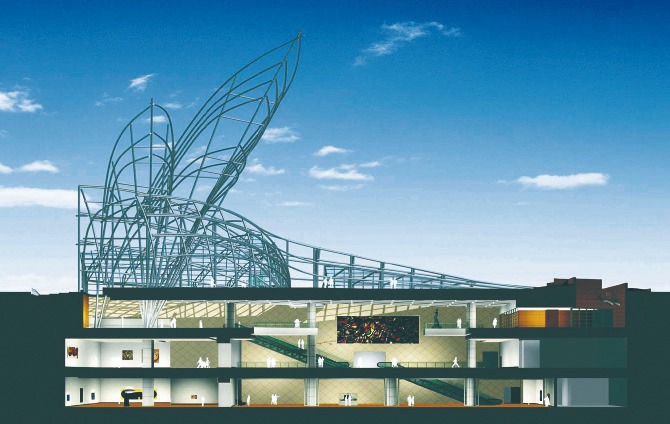
Pelli Clarke & Partners Japan
Throughout the museum, the materials of floors, walls, and other interior surfaces have been carefully chosen to suit the purpose and function of each space. The floor of the entrance hall on the first basement level is finished with Italian rosso alicante mosaic marble tiles. Reflecting both natural light from the glass ceiling and the museum’s interior lighting, the tiles shimmer subtly, creating a bright and welcoming atmosphere despite the underground location.
The floors of the exhibition galleries consist of end-grain Douglas fir, which dampens the sound of footsteps. Meanwhile, the large atrium walls extending from the first to the third basement floors are clad in pale beige American sodalite, giving the interior a warm, unified overall tone.
-
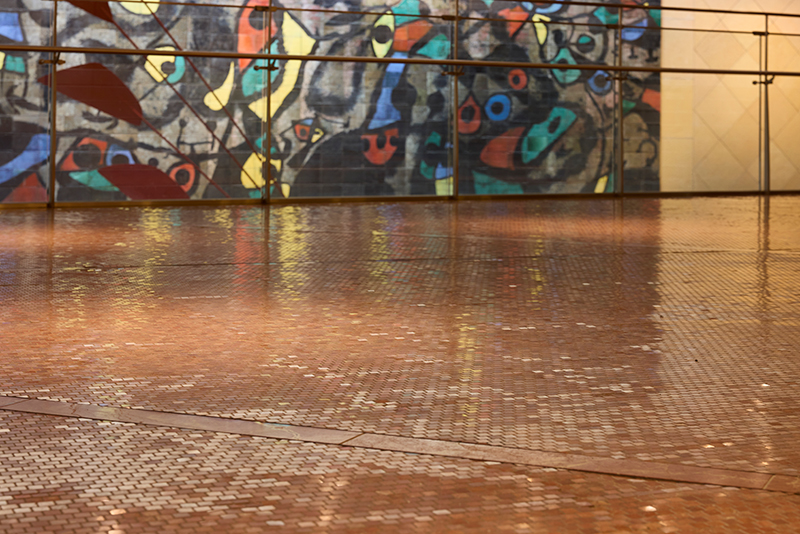
The floor of the entrance hall
-
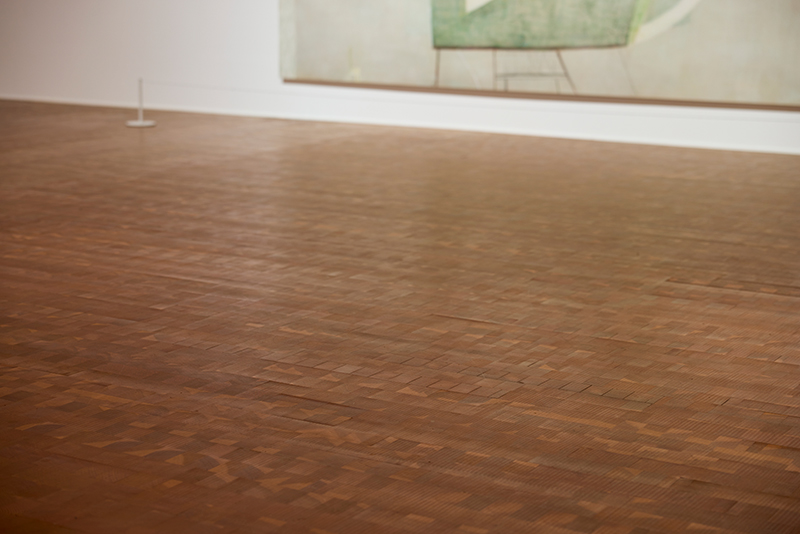
The floor of the exhibition gallery
-
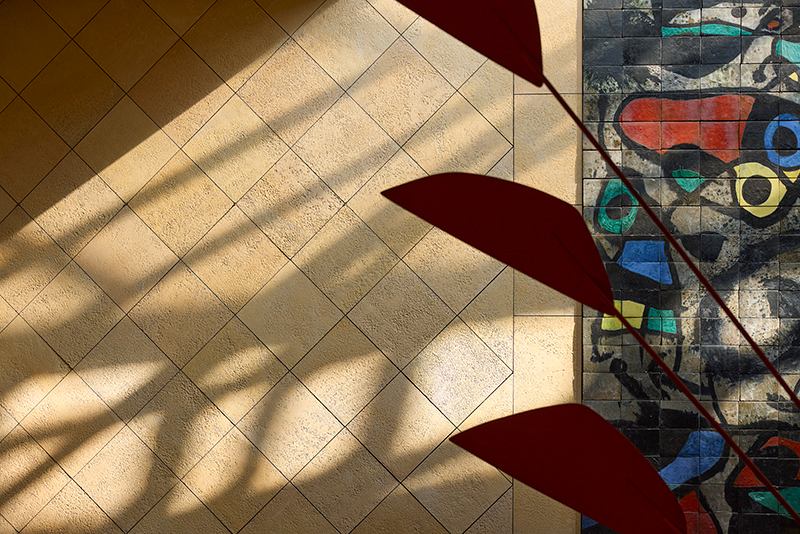
The atrium wall
| Design and Management | Building Department, Kinki Regional Development Bureau, Ministry of Land, Infrastructure, Transport and Tourism Cesar Pelli & Associates Japan (now Pelli Clarke & Partners Japan) |
|---|---|
| Contractors | Specified Construction Joint Venture: Zenitaka, Konoike, Ohmoto |
| Building Area | 4,156.54 ㎡ |
| Total Floor Area | 13,486.83 ㎡ |
| Structure | Reinforced concrete (flat slab structure), partially steel reinforced concrete |
| Floors | 1 floor above ground, 3 floors below ground |